This information tells you what your child will be learning each term in Nursery.
Autumn Term
We really value the help you can give your child with their learning and self-help skills. These are some of the things you can do:
- Help your child dress and undress themselves, especially coats
- Help your child use the toilet properly, flush the toilet, and wash and dry their own hands
- Help your child use a tissue to wipe their own nose and throw it in the bin
- Encourage your child to tidy up their own toys
- Spend time talking with your child, and reduce time spent watching television or on a tablet, to help build their speaking and listening skills
Communication and Language
- Listening to instructions and following them
- Enjoying interactive stories and songs
- Joining in with repetitive rhymes
- Recalling events from their day or a simple story
- Understanding a range of action words, such as jump and hop
- Using new words learned through topic work to extend their vocabulary
Personal, Social and Emotional Development
- Separating from their main carer independently
- Selecting and using resources correctly, with help at first
- Showing interest in other children’s play and starting to join in
- Beginning to recognise and express their own feelings, such as happy, sad, cross, scared or worried
- Showing an understanding of nursery routines and rules, and following them
Physical Development
- Managing their own self-care, such as going to the toilet and putting on their coat, shoes and clothes
- Becoming more independent when eating and drinking snack or lunch
- Developing gross motor skills, such as balancing, climbing and ball skills like kicking and throwing
- Running carefully and avoiding obstacles
- Using a comfortable grip with more control when holding pens and pencils
- Drawing lines and circles using arm and hand movements, to help build writing skills
Literacy
- Tuning in to and creating different types of sounds, such as animal sounds and sounds around us
- Learning nursery rhymes by saying them, not just listening on a screen
- Understanding that print carries meaning, in books and in the world around us, such as shop signs
- Exploring how to make marks with different tools, such as fingers in sand, paintbrushes, sticks and pens
- Explaining what they have drawn, to help give their marks meaning
Maths
- Reciting numbers in order, up to and beyond 5
- Counting sets of up to 5 objects, saying one number for each item
- Learning that the last number counted names the total in a set
- Learning new maths words, such as shape, size and quantity
Understanding the World
- Learning about their own life story and the lives of family members
- Recognising similarities in cultural, religious and community events, such as food, fireworks, parties and celebrations
- Talking about seasonal changes they notice on the way to and from nursery
- Exploring how things work, such as jigsaw puzzles, models and vehicles
- Talking about different materials used in art activities
Expressive Arts and Design
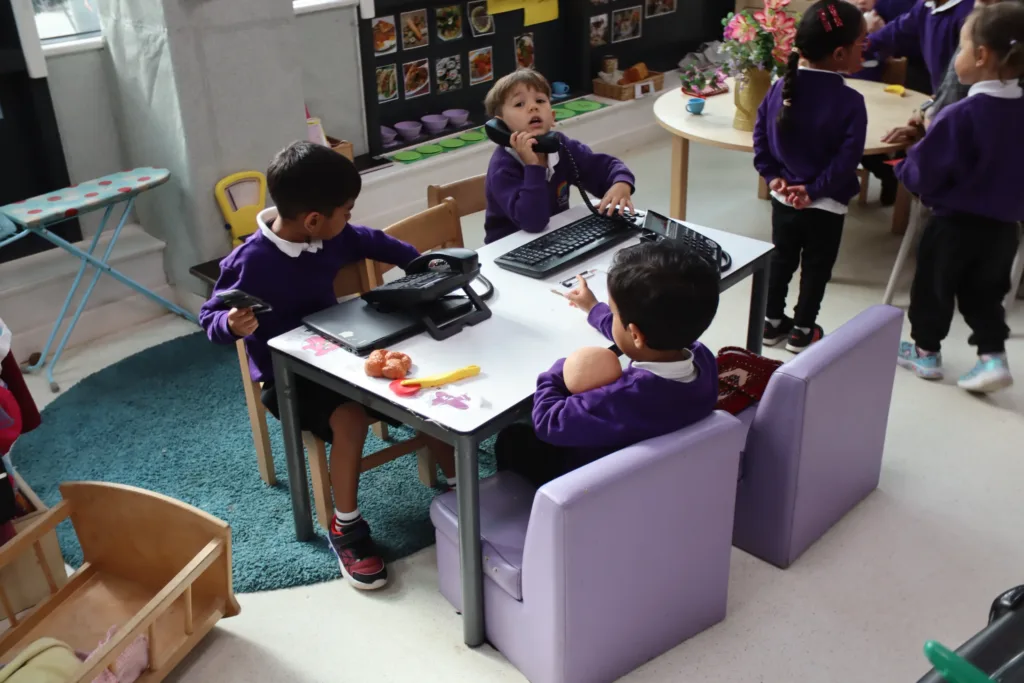
- Beginning to make believe through small world resources and dressing up
- Exploring sounds made by different musical instruments
- Exploring different art materials and techniques
- Drawing shapes and lines to represent objects, and naming what they have drawn
Spring Term
These are some of the things you can do:
- Order a book bag from the office if your child does not have one, so they can take part in our library
- Return library books in the same condition they were sent home in
- Continue helping your child put on their coat independently
- Help your child practise doing up their own zip and putting on gloves. Mittens may work better than gloves if your child finds them tricky
- Look out for home learning activities sent through Tapestry, and spend time talking with your child about them
Characteristics of Learning
- Making independent choices as they access a wider range of resources
- Planning and thinking ahead about how they will explore or play with objects
- Keeping on trying when they try a new skill or activity
- Creating stories as they play in small world settings or role play
- Feeling confident about having and using their own ideas
Communication and Language
- Developing vocabulary during topic work and outdoor sessions
- Using longer phrases and sentences in back and forth conversations, and when describing their work to an adult
- Recalling what they have done earlier and naming a character in a simple story
- Using question words such as who, where, why and how
Personal, Social and Emotional Development
- Working in small groups to play games, sharing and co-operating with teammates
- Recognising when they need to tell an adult if they are unhappy, worried or sad
- Taking on more responsibility when tidying the classroom
- Trying new, more challenging physical activities outdoors
- Standing up for themselves without being aggressive towards others, using the phrase “Stop, I don’t like that”
- Beginning to think about what we need to do to stay healthy
Physical Development
- Developing a wide range of movement types, showing co-ordination and balance
- Joining in as part of a team, following the rules of the game
- Developing mark making skills, and beginning to write some letter shapes from their name when ready
- Having a go at doing up zips independently
Literacy
- Learning about the different parts of a book
- Choosing books to take home from the Nursery Library
- Using books to learn about real life people or events, such as Chinese New Year
- Developing a wider vocabulary linked to the books we share
- Developing phonic skills by listening for rhyme and alliteration, such as “six silly snakes”
- Using Tales Toolkit to make up their own stories, with a character, setting, problem and solution
Maths
- Developing counting and number skills with numbers to 5
- Recognising numbers to 3 and then 5
- Learning maths words such as more, fewer, same, give and altogether
- Learning words connected to length and height
- Learning about 2D shapes, their properties and pattern
- Using positional language such as under, over, in, on and behind
Understanding the World
- Learning about weather and climate, and how to look after living things
- Looking at the differences between Colindale and other places in the world
- Learning about cultural events, such as Chinese New Year, Ramadan and Eid
- Learning about their own history, from baby to toddler to child, through birthdays
- Describing what they see happening as they explore different materials
Expressive Arts and Design
- Learning about the work of different artists, including Ruba Salameh from the Middle East
- Creating more complex small world stories based on their own experiences, through Tales Toolkit
- Developing their own ideas and choosing the materials they need
- Beginning to draw pictures that closely represent the object
- Exploring different types of painting resources
- Learning new songs and actions
Summer Term
These are some of the things you can do:
- Get a book bag from the office if you have not done so already, so your child can take home a library book each week
- Apply sun cream to your child before nursery on hot, sunny days, and send them in with a sun hat
- Talk to your child about starting Reception in September, if they have a place at Colindale
- Come along to our parent information meeting in June if your child is moving to Colindale Reception
During the second half of the summer term, we will start to prepare children for the move to Reception. Children with a place in Colindale Reception will spend some time in their new classroom in July. If your child is moving to a different school, that school will make its own arrangements with you.
Characteristics of Learning
- Making independent choices as they access a wider range of resources
- Planning and thinking ahead about how they will use their chosen resources, whether constructing a model or using small world resources imaginatively
- Persisting when trying a new activity or learning a new skill
- Creating stories using Tales Toolkit, small world settings, or role play
- Feeling confident about using and explaining their own ideas
Communication and Language
- Developing vocabulary during topic work and outdoor sessions
- Using longer phrases and sentences in back and forth conversations, and when describing their work to an adult
- Recalling what they have heard or seen in a simple story
Personal, Social and Emotional Development
- Setting up and helping to run small group games, sharing and co-operating with teammates
- Recognising when they need to tell an adult, or our Worry Monster, if they are unhappy, worried or sad
- Taking on roles within nursery, as part of our work on people who help us
- Trying new, more challenging physical activities outdoors
- Standing up for themselves without stopping others having their rights
- Explaining how we can stay healthy through food and exercise choices
Physical Development
- Developing a wide range of movement types, showing co-ordination, balance and control, using their body or wheeled vehicles
- Joining in as part of a team, following and explaining the rules of a game or activity
- Developing mark making skills, leading to writing a wider range of letter shapes and their name
Literacy
- Learning about the different parts of a book
- Finding out how fiction and non-fiction books differ
- Explaining why they like a certain book or story
- Using books to learn about real life people or events, such as Eid or other countries
- Developing a wider vocabulary linked to topic books
- Developing phonic skills by recognising initial sounds, and blending and segmenting letter sounds
Maths
- Developing counting and number skills to 10
- Learning maths words such as more, fewer, same, equal, less, how many altogether and how many left
- Learning routes and directional language, such as next to, behind, around, forwards and backwards
- Using positional language, such as over, under, through, in and on
- Learning vocabulary connected to measurement, shape and pattern
- Learning about sorting items in different ways
Understanding the World
- Learning about environmental features, such as weather and climate
- Knowing there are different countries in the world, and talking about them
- Learning how we need to look after living things
- Learning how to help the things we plant continue to grow
- Learning about people who help us, at home, at school and in the wider community
- Learning about different cultures and other countries
Expressive Arts and Design
- Creating more complex small world stories based on their own experiences and linked to topic themes, alongside Tales Toolkit
- Developing their own ideas and choosing the materials they need
- Beginning to draw and paint pictures that closely represent the object
- Exploring a wider range of art resources, such as charcoal and oil pastels
- Singing entire songs, and learning more songs over the term
- Beginning to learn about musical speed, volume and pitch
Other Information
Staying in touch
- Look at your child’s online Tapestry journal and send a reply if you can. If you cannot access your account, please tell a member of staff as soon as possible
- Check your child’s book bag every day for important letters and library books
- Check Arbor and the school website regularly for newsletters and events
If you need to discuss any issues regarding your child, please speak to their keyworker first or the class teacher, Mrs Walsh. If you cannot speak directly to a member of staff, the best way to contact us is via email: office@colindale.barnetmail.net. Please enter your child’s name and class into the subject line.